Posts

Showing posts with the label Artificial Intelligence (AI)

The Rise of Automation: Revolutionizing Industries and Transforming the Future

Image
 Automation, once a distant dream of science fiction, is now becoming a reality that is rapidly reshaping industries and propelling us into the future. From manufacturing and transportation to healthcare and customer service, automation is revolutionizing the way we work, live, and interact. In this blog, we will explore the rise of automation, its impact on various industries, and its transformative potential for the future. Understanding Automation: To grasp the significance of automation, we must first understand its essence. Automation refers to the use of technology, such as artificial intelligence (AI), robotics, and machine learning, to perform tasks or processes with minimal human intervention. It aims to streamline operations, enhance efficiency, and reduce human error. Automation in Manufacturing: The manufacturing industry has been at the forefront of automation for decades. With the advent of industrial robots, automated assembly lines, and advanced control systems, pro...
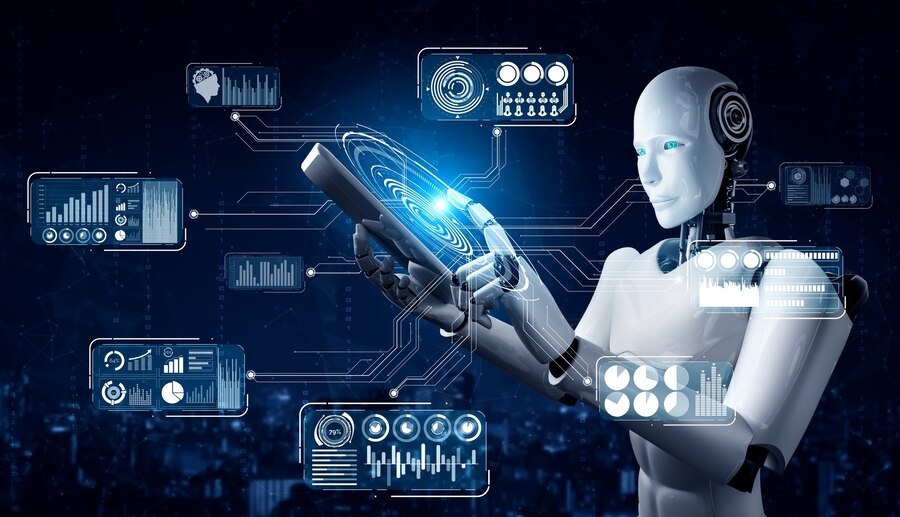
"Revolutionizing Efficiency: The Power of Robotic Process Automation (RPA)"

Image
Robotic Process Automation (RPA) is a technology that has been revolutionizing efficiency in a number of industries in recent years. RPA involves the use of software robots, or bots, to automate repetitive and rule-based tasks that were previously performed by humans. This technology has the potential to drastically reduce the time and cost required to complete these tasks, freeing up human workers to focus on more complex and strategic work. One of the key benefits of RPA is its ability to improve accuracy and reduce errors. By automating tasks such as data entry or invoice processing, RPA can significantly reduce the number of mistakes that occur due to human error. This can lead to cost savings and improved efficiency for businesses that rely on accurate data and timely processing. RPA is also highly scalable, meaning that it can easily adapt to changes in demand or workload. As businesses grow and expand, they can quickly deploy additional bots to handle increased volumes of work w...